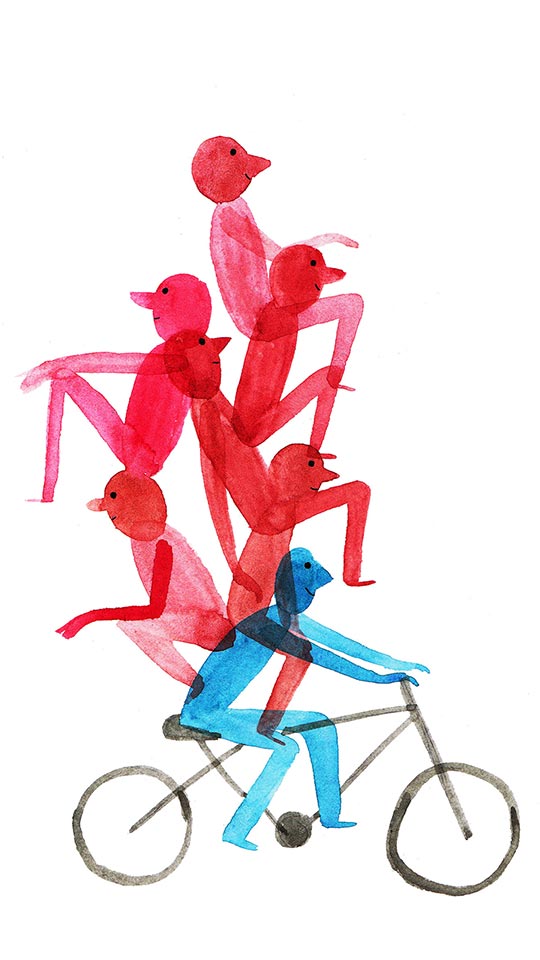

There’s a new kind of leadership taking hold in organizations. Strikingly, these new leaders don’t like to be called leaders, and none has any expectation that they will attract “followers” personally — by dint of their charisma, status in a hierarchy, or access to resources. Instead, their method is to get others excited about whatever problem they have identified as ripe for a novel solution. Having fallen in love with a problem, they step up to leadership — but only reluctantly and only as necessary to get it solved. Leadership becomes an intermittent activity as people with enthusiasm and expertise step up as needed, and readily step aside when, based on the needs of the project, another team member’s strengths are more central. Rather than being pure generalists, leaders pursue their own deep expertise, while gaining enough familiarity with other knowledge realms to make the necessary connections. They expect to be involved in a series of initiatives with contributors fluidly assembling and disassembling.
In front of a packed room of MIT students and alumni, Vivienne Ming is holding forth in a style all her own. “Embrace cyborgs,” she calls out, as she clicks to a slide that raises eyebrows even in this tech-smitten crowd. “Really. Fifteen to 25 years from now, cognitive neuroprosthetics will fundamentally change the definition of what it means to be human.”
See the original blog -
https://hbr.org/2018/04/the-power-of-leaders-who-focus-on-solving-problems?fbclid=IwAR0me4VjyaI_9xScUryeTJBMnC7Ivul_uvk3bqgBuG6sGydt16uVc2tnOcs